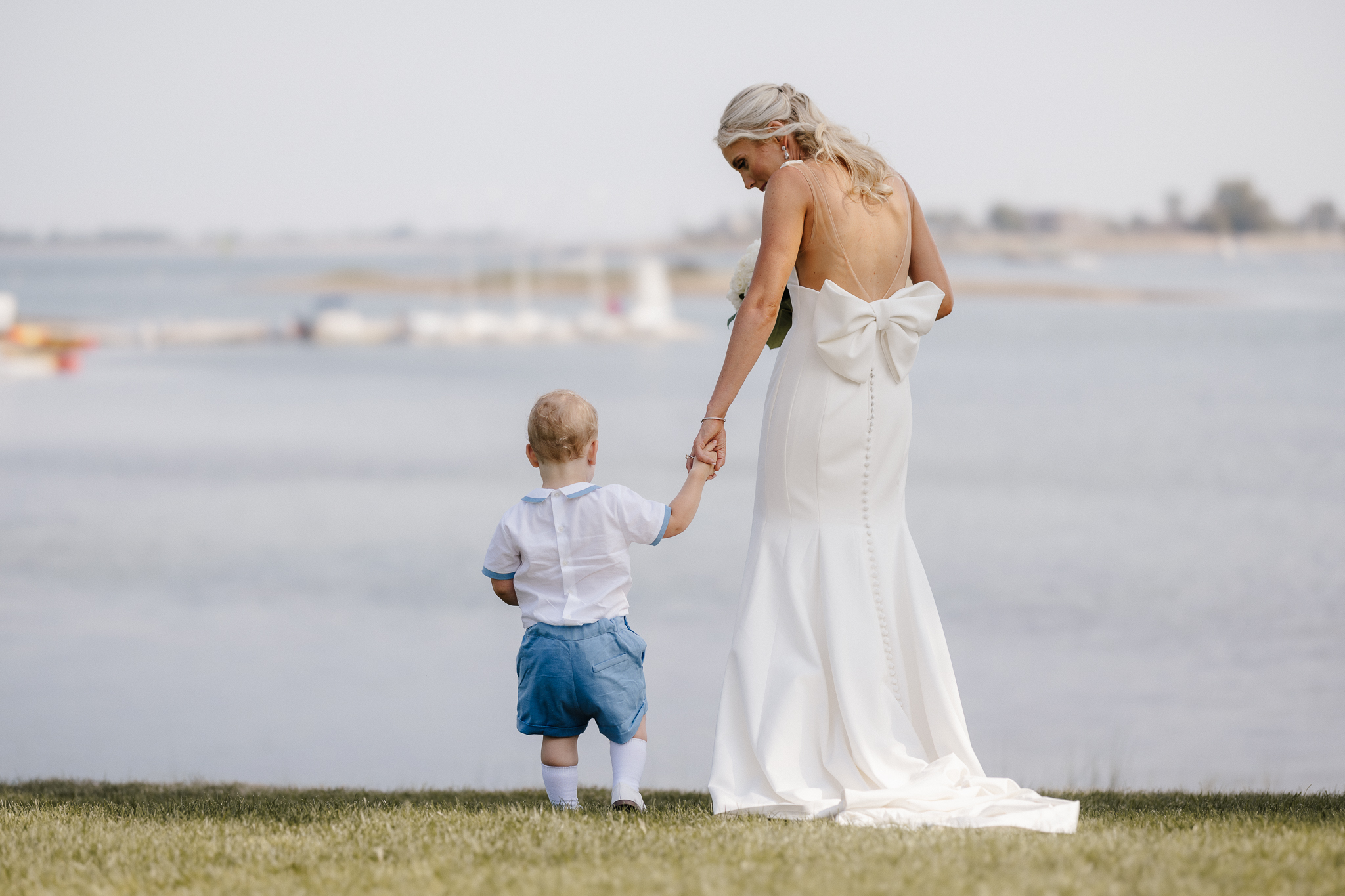
If you’ve been researching photography styles, you may have come across the term documentary wedding photographer and wondered what it actually means in practice. The word “documentary” sounds official, maybe even a little clinical. But in reality, it describes one of the warmest, most human approaches to photographing a wedding day.
A documentary photographer doesn’t direct your day. She watches it unfold. Whether it’s a small elopement or a larger gathering, she’s there for the look that passes between you and your partner when you see each other for the first time, for the quiet moment your grandmother sits alone before the ceremony, and for the way your best friend laughs so hard she has to hold the wall before she falls over. These aren’t moments you can recreate. They happen once, and then they’re gone, and a documentary photographer exists to make sure they’re not lost.
What a Documentary Wedding Photographer Actually Does
The word “documentary” draws on the tradition of photojournalism and reportage, where the aim is to observe and record without interfering. Documentary wedding photography borrows from that tradition and applies it to one of the most emotionally layered days of your life.
In practice, this means your photographer is present without intruding. She moves through your day quietly, staying close enough to capture expression and detail but far enough back that you forget she’s there. She’s not calling out instructions or repositioning people. She’s reading the room, noticing where light falls naturally, and waiting for the moment to reveal itself.
That doesn’t mean a documentary approach involves zero guidance. Most photographers who work in this style will help with family portraits, offer a gentle cue here and there, and work with you in advance to understand how your day will flow. The goal isn’t to be invisible. It’s to stay out of the way of your actual experience so what she captures is real.
When I say my approach is documentary-first, I mean that observation comes before direction. I watch before I adjust. I follow the story of your day rather than writing it for you. The moments I’m drawn to are not the ones I’ve set up. They’re the ones I notice while everyone else is looking somewhere else. That’s what candid wedding photography is really about.
There’s a term I sometimes use alongside documentary-first: “gentle documentary.” It’s my way of describing an approach that doesn’t just passively record a day from a distance, but moves quietly and warmly through it. I’m close enough to see the small things. I’m quiet enough that you forget to perform for me.
What I’m Actually Doing When I’m Not Posing You
This is the part I find hardest to explain, because it looks like not very much from the outside.
When I’m standing quietly near the door while you’re getting dressed, I’m reading the room. Some of that is about light: where it falls, how it moves. Mostly it’s about the people around you, who keeps looking at you with soft eyes, who’s holding back tears and pretending they’re fine, where the moment that’s about to happen is quietly gathering itself.
When you’re at the altar and I’m stepping slowly to one side, it’s because I’ve watched enough ceremonies to know where the light will be when you cry, and I want to be there already.
This kind of attention takes time to develop and it’s mostly invisible to everyone in the room. But it’s what makes the photographs feel like memory rather than documentation, like you’re looking back at something that was real rather than looking at something someone constructed. The images that come from genuine observation land differently than the ones that come from direction. Most people can’t explain why, but they can feel it when they look at the gallery.
The Moments That Tend to Matter Most
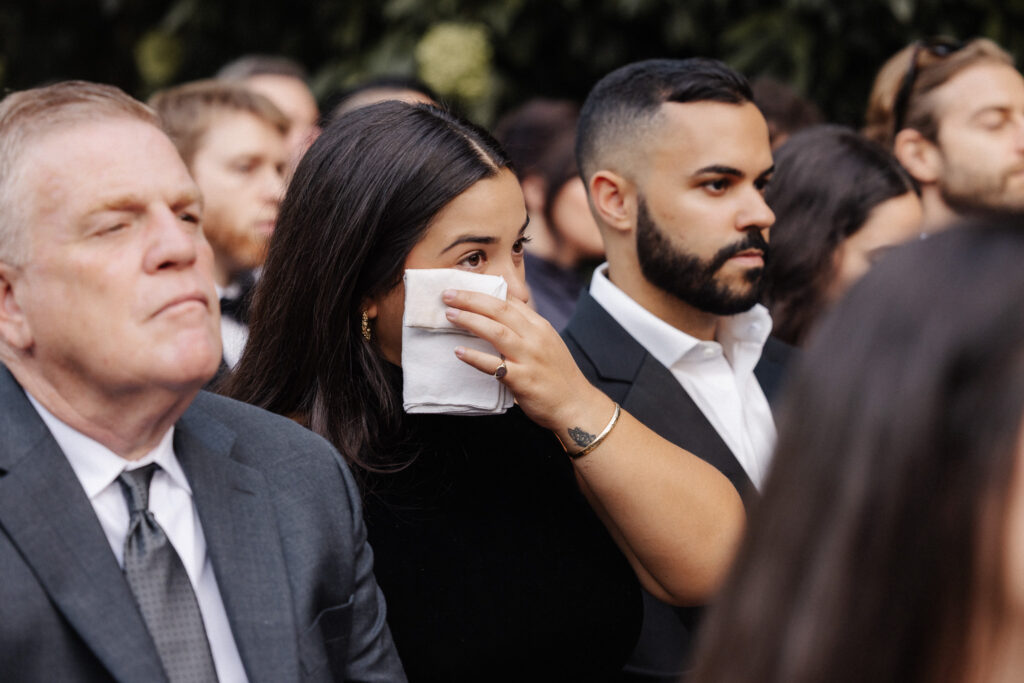
Every couple thinks they’ll remember their wedding day clearly. And they will, in broad strokes. But the specific small moments, the ones nobody announces or stages, those slip away faster than you expect.
The way your partner’s voice changed slightly during their vows. Your mom’s quiet joke while helping you into your dress. The look your best friend gave the room right before your first dance started. A documentary photographer catches these not because she was told to, but because she was already paying attention.
These are the photographs that couples return to years later. Not only the formal portraits, though those matter too, but the ones that feel like a piece of the actual day rather than a reproduction of it. The ones where something true is visible in a face. Those are worth more than any staged shot, and a good documentary photographer knows where to look for them.
The moments I find myself gravitating toward most are the ones between things. The quiet after you’ve finished dressing but before you’ve walked downstairs. The way your people hover just outside the ceremony space, all dressed up and not quite sure what to do with themselves yet. And then there are the first few minutes of a reception, when the room is still buzzing, no one’s found their seat yet, and the whole thing feels alive in a loose, unscripted way.
I also love the edges of things. The small gestures. Your partner resting a hand on the small of your back during cocktail hour. The way your best friend catches your eye across the room when something funny happens during the ceremony. These aren’t on any shot list because you can’t put them on one. But they’re often the photographs that mean the most, because they’re the ones that prove the day was real.
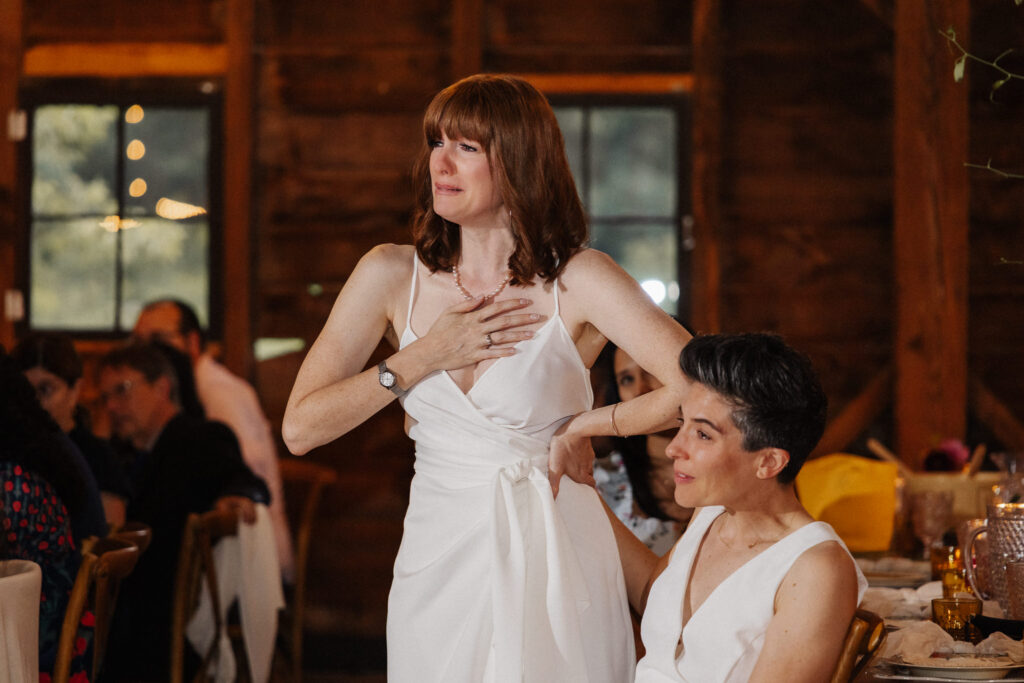
For a deeper look at why this philosophy shapes every wedding I photograph, the details page walks through how I think about the work.
How This Approach Feels Different on Your Wedding Day
If you’ve ever felt anxious about being photographed, a documentary style is worth understanding because it addresses that anxiety directly. There’s minimal posing. No “turn this way, chin down, hands here.” You’re not performing for a camera. You’re just living your day, and the photographs come from that.
Couples who’ve worked with a documentary photographer often describe the experience as surprisingly easy. You stop thinking about the camera because the camera isn’t demanding anything from you. You’re talking with your family, sitting with your partner, laughing with your friends, and the photographs happen in the middle of all that real life.
The couples I work with tend to tell me one of two things after their wedding. The first is that they forgot I was there for long stretches of the day. The second is that they had no idea so much was happening around them until they saw the gallery.
Both of those things make me very happy.
What I want for you on your wedding day is to be so inside the experience that the photographs almost surprise you. You should look at the gallery and think: yes, that’s exactly how it felt. Not: that’s a good pose. Not: I remember her making us do that.
What to Expect During Your Wedding Day
Working with a documentary wedding photographer looks different depending on the photographer, but a few things tend to be consistent. She’ll be with you through the getting-ready moments, present without hovering. She’ll follow the natural movement of your day rather than dictating it. And she won’t interrupt your experience to redirect you unless it’s genuinely necessary.
You can expect a mix of intimate portraits and observational, or reportage, shots throughout the day. A good documentary photographer isn’t opposed to portraits. She just approaches them differently, prioritizing connection over positioning. If she does ask you to step somewhere for a few photographs, it’ll feel like a gentle suggestion rather than a photo production. Portraits are where I’m happiest to give a little more direction, so they can feel composed and artful while still looking like the two of you.
You also won’t feel managed. I’m not there to run your timeline or coordinate your vendors or wrangle your guests. I’m there to document what unfolds. That means your wedding day gets to belong to you, and I get to follow it honestly. If you lose track of where I am, that’s when I’m doing my job well.
What you will have at the end is a gallery that looks and feels like your actual wedding, not a version of your wedding dressed up for Instagram. The images will be warm and honest and sometimes a little imperfect in the way real things are. And they’ll be yours in a way that staged photographs rarely are.
The Wedding Photojournalist Association is a helpful resource if you want to learn more about the broader documentary tradition in wedding photography and what to look for when reviewing a photographer’s work.
Why Documentary Photography Fits Intimate Weddings Particularly Well
If you’re planning a small, intentional celebration, documentary photography has a particular logic to it. When your guest list is small, everyone at your wedding is someone you love. There’s nowhere to hide from that, in the best way. The room is full of real feeling, and a documentary photographer’s whole approach is built to capture it.
Smaller weddings also give me more room to be present with each person and each moment. I’m not running between a hundred guests trying to catch everything. I’m following the thread of your actual day, which in a small wedding tends to be rich and specific and deeply personal.
Documentary Photography and Central New York
I photograph weddings across Central New York and the surrounding region, and the landscape here lends itself beautifully to this kind of work. There’s a particular quality to light in the Finger Lakes in late summer, or in a restored barn in Madison County in October, or along the shore of Cazenovia Lake on a gray morning that unexpectedly clears. These settings don’t need to be dressed up. They’re honest places, and documentary photography does well in honest places.
Many of the couples I work with choose venues in Syracuse, Cazenovia, Skaneateles, Hamilton, or the small towns surrounding them because they want their wedding to feel rooted in something real. That instinct and the documentary approach tend to come from the same place.
If you’re planning a wedding in Central New York and you’ve found yourself drawn to photographs that feel unposed and emotionally present, that’s worth paying attention to. You can see more of what this work looks like in my galleries.
Why I Shoot This Way
The honest answer is that I can’t really imagine shooting any other way.
I’m especially drawn to intimate weddings, because I believe the smaller the gathering, the more present everyone can be, though I photograph larger weddings too. And I approach every wedding with a documentary-first mindset because I think the most real thing I can offer someone is their actual day, not a styled version of it.
My own wedding was an elopement. Will and I were married at Hearthstone Castle in Tarrywile Park in Danbury, Connecticut. My friend Susan officiated, a small group of friends came, and a few of them took photos. Afterward we all went out to dinner, and then the two of us went home, ate pickle chips (courtesy of my friend, Amanda) on the couch, and watched TV. It was quiet and relaxed, not traditional, and not fussy at all.
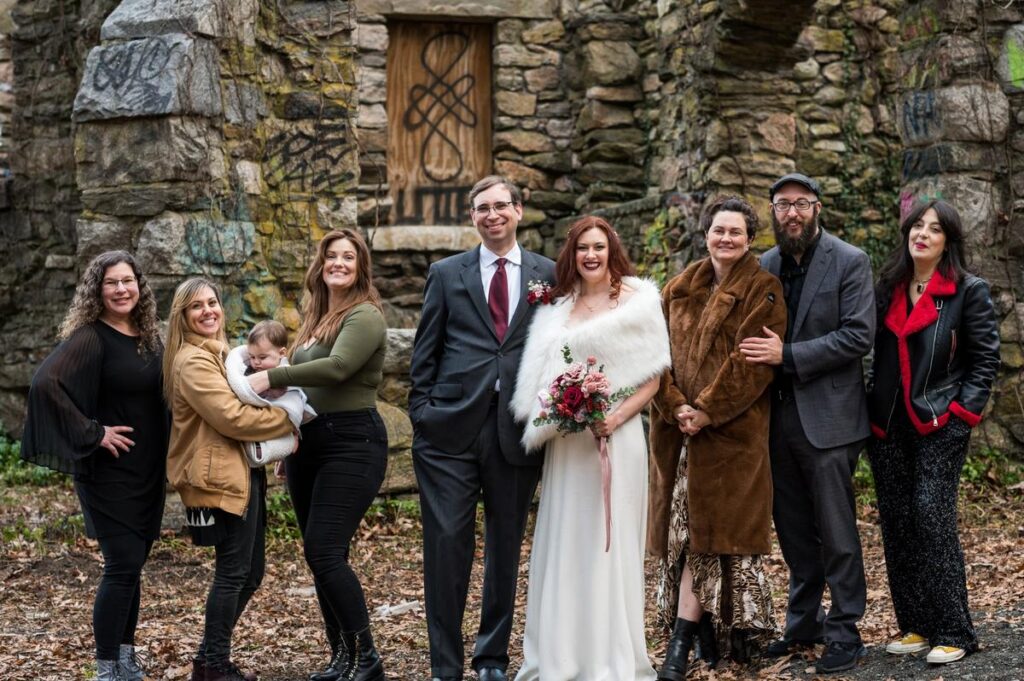
Days like that are the ones I want to photograph. Not to make them look a certain way, but to give them back to couples exactly as they were.
Is a Documentary Wedding Photographer the Right Fit for You?
Not every couple wants a documentary approach, and that’s worth saying clearly. If you want every part of your day posed, or a first look choreographed step by step, a documentary-first photographer probably isn’t the right fit.
That doesn’t mean choosing between real moments and beautiful portraits, though. My approach is documentary at heart, with room for thoughtful, artful portraits. I’ll give you direction when it’s helpful, then step back so you can enjoy the moments that matter.
But if you want photographs that feel like you, like your actual relationship and your actual day rather than a version someone else designed, then yes. A documentary photographer is probably exactly what you’re looking for.
Couples who tend to love this approach are usually the ones who feel a little awkward in front of a camera, who want their day to feel natural and unhurried, and who care more about honesty than perfection. If that sounds like you, it’s worth seeking out a photographer whose portfolio reflects that philosophy. Look for images where people aren’t looking at the camera. Look for photographs that feel like you interrupted something real. If you’re curious how documentary and candid photography relate to each other, this post on candid wedding photography explores that in more detail.
Finding the Right Documentary Wedding Photographer in Central New York
Central New York has no shortage of talented wedding photographers, but documentary-style work requires something specific: patience, a genuine familiarity with light and human behavior, and the ability to stay present without intruding. It’s worth looking carefully at a photographer’s portfolio before booking. Are the photographs clearly staged? Or do they feel like she caught them in the middle of something real?
It also matters whether the photographer’s personality is a good fit for you. A documentary photographer will be with you all day. If you’d feel at ease having her in the room during quiet, personal moments, that’s a good sign. A first conversation that feels pressured or formal is worth paying attention to.
If you’re planning an intimate wedding, you can see real examples of this approach in the galleries from couples I’ve worked with. The photographs say more than I could.
Trust Is What Makes It Work
Documentary wedding photography runs on trust. Not the performed kind, where you put on a brave face for the camera, but the quiet kind that develops when someone has been genuinely present with you all day without asking you to be anything other than yourself.
That trust takes some time to build, which is why I’m always glad to talk before you book, and why every one of my collections includes an engagement session before the wedding: thirty minutes with The Vows, The Essentials and The Heart of the Day, and a full hour with The Full Day. By the time your wedding day arrives, you’ve already spent time together with me. The camera becomes familiar, and because you’re not performing for it, what shows up in the photographs is just you, the real version, which is always the most beautiful one.
If you’re curious whether this approach feels right for your celebration, I’d love to have that conversation. You can reach me through the contact page.